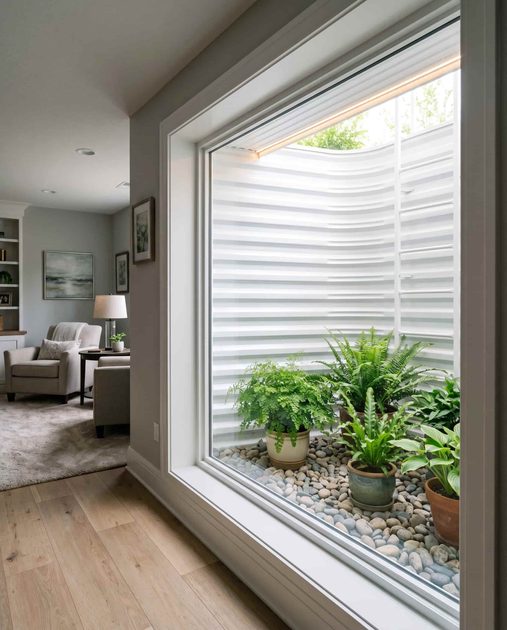
A code-compliant window well is a hole in the ground with a steel liner. A designed window well is a light shaft that makes your basement feel like a garden-level room. The difference is about three decisions: what the walls are made of, what sits at the bottom, and whether you light it. I treat every window well as a small exterior room — visible from inside, experienced from above, and capable of pulling daylight deeper into the basement than the window alone ever could.
Three Design Moves
White Walls
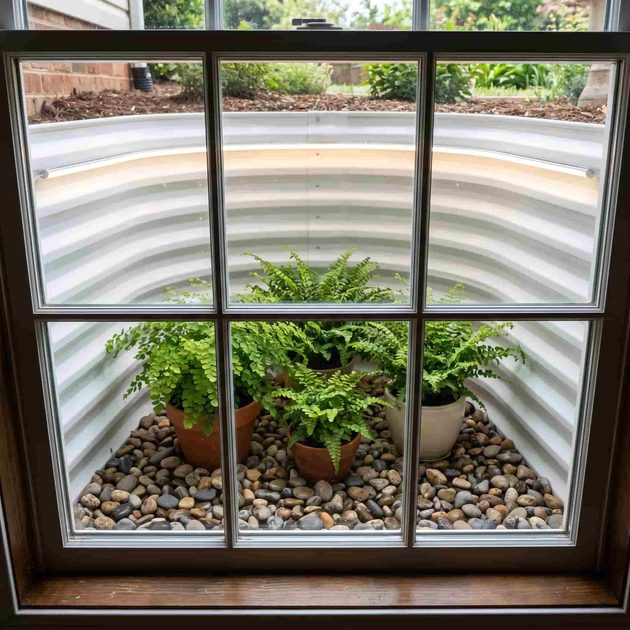
A galvanized steel well with dirt at the bottom absorbs light. A white-painted corrugated metal liner reflects it. The difference is measurable. A white well bounces roughly 60 percent more daylight through the window opening than bare galvanized steel. I spec white for every egress and non-egress window well. The material is standard corrugated steel, factory-painted white, or site-painted with a rust-inhibiting primer. The white surface also reads as intentional — more architecture, less utility vault.
Gravel and Plants
The base of the well gets 4 inches of river rock for drainage. On top of that, I place one or two large planters — not small pots that look like an afterthought. In the Hyde Park basement apartment, a single rectangular fiberglass planter spans the width of the well, planted with native ferns that thrive in low light and high humidity. The plants are visible from the bed. They soften the hard edges of the foundation wall and give the room a connection to something alive. A planter also prevents the well from becoming a catch-all for leaves and debris.
Integrated Lighting
A strip of outdoor-rated LED tape tucked under the top rim of the well, aimed downward, washes the white walls at night. On a dimmer, it turns the well into a soft light source that glows through the window after dark. The light also makes the well safer — no dark pit outside the bedroom window. I wire it to the same circuit as the room's accent lighting so it dims with the rest of the space.
Real Examples
The Lincoln Park Media Room
The media room had a single small window in the lounge area. The original well was rusted galvanized steel with a plastic cover. We replaced it with a white steel liner, added a gravel base, and installed a planter with low-maintenance hostas. A small LED strip on a timer lights the well from dusk to midnight. The result: the lounge feels brighter during the day and glows softly at night, even though the window is only 24 by 36 inches.
The Oak Park Music Room
The egress window in the music room needed a well that could handle sound bleed to the outside. We lined the well with acoustic absorption panels behind a perforated metal liner painted white. It still reflects light, but it knocks down drum frequencies before they reach the neighbor's yard. Plants were omitted here — the well is deep enough that maintenance would be difficult — but the white liner and lighting remain.
The Wicker Park Playroom
The kids' Lego zone has a window well that doubles as a small play feature. The base is smooth river rock, and the planter holds hardy succulents that don't need much water. A clear acrylic cover at grade lets the child look up and see sky. The well is shallow — only 36 inches deep — so the plants are close enough to touch. The family calls it the "secret garden."
Why It Matters
A window well treated as design, not compliance, changes how a basement room registers in the mind. You stop feeling underground. You start feeling like you're in a room that happens to be tucked into the earth. The window well becomes a feature you show guests, not a pit you hide behind curtains.




No notes yet — write the first one.