The best small basement window covering ideas do more than hide a narrow pane of glass. They control glare, protect privacy, soften hard foundation walls, and help a lower level feel designed rather than improvised. In older Chicago basements, I often find windows that are only 24 to 36 inches wide, set high on the wall, and surrounded by painted block or patched drywall. That awkward opening needs a precise solution, not an oversized living-room curtain.
Start by measuring the visible glass, the frame, and the clearance around the window. Record the width at the top, middle, and bottom because older masonry openings are rarely perfectly square. Also measure how far the window projects into the room and whether it opens inward. Those dimensions determine whether an inside-mounted shade, outside-mounted blind, or shallow curtain will work.
Begin With Privacy, Light, and Moisture
A basement window usually has three separate design problems. First, it needs privacy, especially when the window faces a driveway, sidewalk, or neighboring foundation. Second, it needs light control. A south-facing basement can develop harsh patches of glare on a television or computer screen, even when the window is small. Third, the covering must tolerate a cooler, more humid environment than an upstairs bedroom.
That is why I usually avoid heavy fabric pressed tightly against cold glass. Condensation can collect behind it, creating a place for mildew and staining. Instead, leave an air gap, choose washable materials, and keep the sill accessible for inspection. If the basement has a history of seepage, fix that condition before adding any permanent treatment. A beautiful shade cannot compensate for a damp foundation wall.
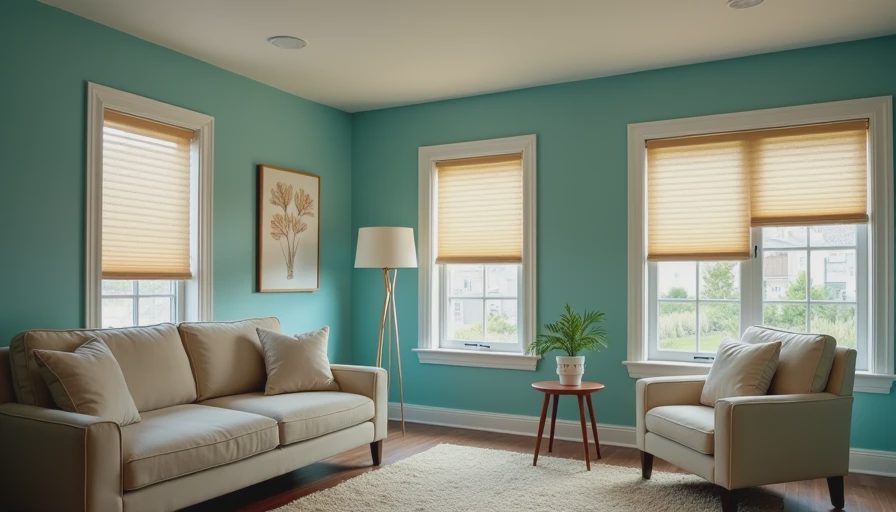
For a dry, finished room, cellular shades are one of the most efficient small basement window covering ideas. Their honeycomb structure insulates the glass while taking up very little visual space. A light-filtering white or warm gray version brings in daylight without exposing the room. Choose a cordless model for a cleaner appearance and safer operation around children. Prices commonly start around $40 for a basic small shade and can reach $150 or more for custom sizing and blackout fabric.
Use the Window Opening to Your Advantage
A narrow basement window can become a deliberate architectural detail. Rather than pretending it is a regular above-grade window, frame it with a simple wood extension jamb and paint the trim the same color as the wall. This makes the opening look finished without visually enlarging it. If the wall is painted Benjamin Moore White Dove, for example, matching the trim creates a calm recess; a dark charcoal trim creates a sharper, more graphic moment.
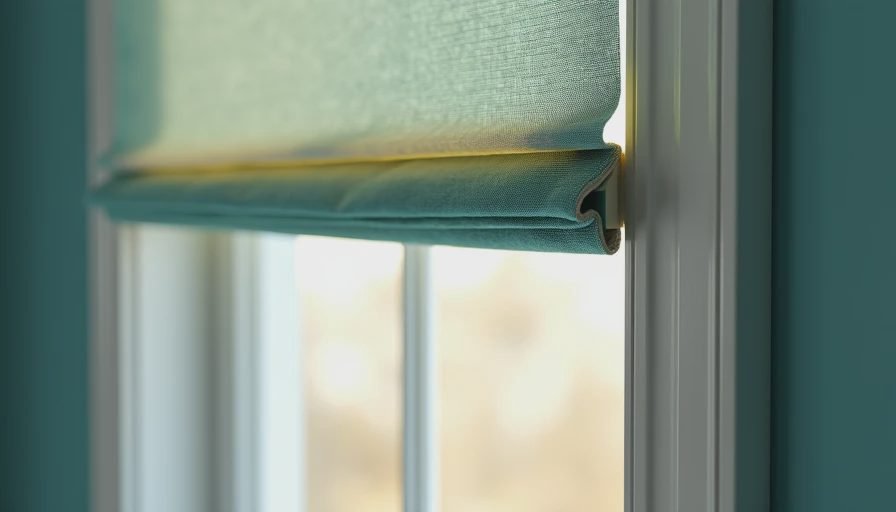
One of my favorite small basement window covering ideas is an outside-mounted Roman shade placed several inches above the opening. The shade covers the uneven perimeter and gives the small window more presence. Use a flat Roman shade in a durable linen-look fabric, but keep the pattern quiet. A horizontal stripe can make the opening seem wider, while a soft solid color keeps the room from feeling busy.
For a basement office, a solar roller shade is often the most practical answer. Opacity is measured by openness factor, so a 3 percent fabric blocks more glare than a 5 percent fabric while still admitting some daylight. A neutral gray or sand-colored shade reduces screen reflections without making the room feel like a cave. Brands such as Bali and Levolor offer ready-made options, while Hunter Douglas provides more custom configurations and motorized controls.
If the window is in a media room, pair a blackout roller shade with a shallow curtain panel. The roller shade does the technical work, and the fabric adds warmth. Mount the curtain rod wider than the window only if the wall allows it; in a narrow basement, an extra 4 to 6 inches on each side is usually enough. Avoid letting fabric pool on the floor, where basement dust and moisture make it difficult to maintain.
Four Covering Strategies for Tight Openings
Inside-mounted cellular shades are best when the frame is reasonably square and the window opens freely. They disappear into the recess and preserve every inch of floor space. Measure the narrowest width and order according to the manufacturer’s deduction requirements rather than trimming the product yourself.
A top-down, bottom-up shade works well when the basement needs daylight but also requires privacy. You can lower the shade from the top while keeping the lower half closed, which is useful for a window at eye level from the outside. This option costs more, often $120 to $300 per window, but it solves two competing problems with one mechanism.
Interior shutters suit a finished basement bar, guest room, or traditional study. Composite shutters resist humidity better than unfinished wood and can be wiped clean. Their drawback is depth: a shutter frame can project 3 inches or more into the room, so confirm that it will not interfere with an opening casement window.
Finally, a tension-mounted cafe curtain is an inexpensive choice for a utility zone, laundry room, or workshop. Select cotton canvas or a washable polyester blend, and use a removable rod rather than drilling into questionable masonry. This approach is less polished than a fitted shade, but it can cost under $30 and is easy to replace during a later renovation phase.
Coordinate Coverings With the Basement Plan
Window treatments should support the room’s function. In a guest suite, use blackout shades so early morning light does not expose the fact that the room sits below grade. In a playroom, choose cordless shades with sturdy hardware and washable surfaces. In a home gym, skip thick fabric near equipment and use moisture-tolerant roller shades instead.
I also look at sightlines before choosing a color. A tiny window directly across from the basement stairs becomes part of the arrival view, so it deserves a more intentional treatment. Two matching windows along a long wall should generally use the same material, even if one faces north and the other faces south. If light levels differ, change the opacity rather than mixing unrelated styles.
The same principle applies to small basement window covering ideas in a multi-use room. A media area, exercise corner, and reading chair can share one lower level without looking crowded when the window treatment stays quiet. Let flooring, a built-in shelf, or a painted accent wall provide the visual interest.
Installation Details That Prevent Future Problems
Before drilling, locate electrical lines, plumbing, and any foundation repairs near the opening. For concrete or masonry, use the correct bit and anchors; ordinary drywall screws will loosen. If the wall is furred out, attach the bracket to framing whenever possible. A laser level helps, but a simple 24-inch level and careful pencil marks are enough for most small shades.
Keep the bottom rail above a damp sill and leave access to the window latch. Do not permanently seal an operable egress window with a fixed panel or glued-on treatment. If the basement bedroom relies on that opening for emergency escape, confirm that the covering can be opened quickly and does not obstruct the required clear area. Local building requirements govern egress dimensions, so this is one detail worth verifying before installation.
For smart controls, a battery-powered shade avoids opening the wall for wiring. A single motorized shade might cost $250 to $700, depending on size and fabric, but it can be worthwhile when the window is behind a desk or difficult to reach. Otherwise, a manual cordless shade gives nearly the same visual result for much less money.
A Practical Starting Point
My preferred sequence is straightforward: repair moisture issues, measure the opening three times, decide how much privacy and darkness the room needs, then choose the shallowest treatment that meets those requirements. For most finished basements, that leads to a cordless cellular shade or solar roller shade mounted neatly within the opening. Add a simple trim surround if the window lacks architectural definition.
The strongest small basement window covering ideas respect the limitations of below-grade rooms instead of disguising them. A narrow window does not need to look larger, brighter, or more luxurious than it is. It needs to work with the wall, the furniture, the humidity, and the way the room will actually be used. Draw the treatment into the floor plan before buying it, and the result will feel like part of the basement architecture rather than a last-minute patch.



No notes yet — write the first one.