A good basement workshop starts with a clear work surface, not a pile of tools. If you are framing a partition, building shelves, or repairing old trim, the Fiskars Isocore 20 oz smooth face claw hammer steel handle is the kind of general-purpose tool that earns space on the wall. Its size sits between a light household hammer and a heavy framing hammer, making it practical for the mixed work an unfinished basement usually demands.
I think about tools the same way I think about basement layouts: each one should justify its footprint. A hammer that is too light can turn a simple nail into a tedious sequence of taps. One that is too heavy can feel excessive when you are working overhead or close to finished surfaces. A 20-ounce head offers a useful middle ground for remodeling tasks, while the smooth face is better suited to visible wood than a deeply textured framing face.
Where this hammer fits in a basement build
The Fiskars Isocore 20 oz smooth face claw hammer steel handle makes the most sense during the rough and finish stages of a project. During rough framing, you might use it to drive common framing nails, adjust blocking, or pull a misplaced fastener. During finish work, the smooth face gives you more control around baseboard, door casing, shelving, and bench construction. It is not a substitute for a sledgehammer, drill, pry bar, or specialized roofing hammer. It is the hand tool you reach for when the task is small enough to control but substantial enough to need real force.
For an older Chicago basement, that distinction matters. You may be fastening a new wall to uneven masonry, building a utility-room shelf, or opening crates of flooring while working around pipes. A compact 20-ounce hammer can handle ordinary adjustments without making every movement feel like demolition. The claw also gives you a second function: extracting bent nails, lifting a small trim piece, or creating just enough leverage to correct a framing mistake.
Think of the work zone as a three-part diagram. Keep the hammer at the front edge of the bench, store fasteners within one arm's reach, and leave the center clear for measuring and assembly. That arrangement prevents the common basement habit of burying the tool you need under materials.
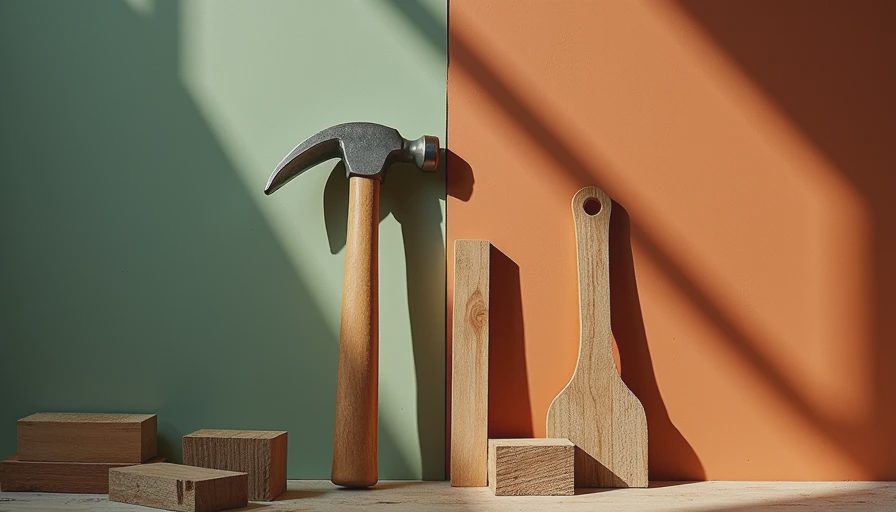
Steel handle and control under pressure
The steel handle is one of the defining reasons to consider the Fiskars Isocore 20 oz smooth face claw hammer steel handle rather than a traditional wood-handled model. Steel provides a durable backbone and does not have the same concern about a wooden handle drying, splitting, or loosening at the head. In a basement where humidity can fluctuate, that construction is appealing. It is also easier to wipe clean after dusty framing or a spill at the workbench.
The tradeoff is feel. Steel transmits more vibration than wood unless the grip and head design manage that energy effectively. For occasional repairs, this is rarely a deciding issue. For several hours of framing, however, hand comfort becomes part of the tool's performance. Hold the hammer near the end of the grip for driving nails, then move closer to the head for delicate placement. Let the head's weight do the work instead of squeezing harder and swinging faster.
A smooth face deserves the same attention. Set the nail square to the surface, begin with controlled taps, and use the final strikes only after the fastener is aligned. That sequence reduces dents in softer pine and helps protect painted trim. If a surface will remain exposed, finish with a nail set rather than trying to bury the head with increasingly forceful swings.
What the 20-ounce size can and cannot do
The 20-ounce format is a sensible single-hammer choice for a homeowner who is building a workbench, installing studs, assembling storage cabinets, or completing a phased basement finish. It has enough mass for ordinary nails and enough maneuverability for tight corners. A lighter 12- or 16-ounce hammer could feel faster for picture hanging and small repairs, while a 24-ounce or heavier framing hammer could be better for repetitive structural work. The right choice depends on how much material you are driving and how long the session lasts.
For example, installing a short partition wall might involve dozens of nails, but you will also be measuring, cutting, checking plumb, and working around existing utilities. The Fiskars Isocore 20 oz smooth face claw hammer steel handle fits that varied rhythm better than a tool designed only for fast production framing. If you are building an entire house addition, your priorities could be different. For one basement room at a time, versatility usually beats specialization.
Do not use the hammer to compensate for a layout problem. If a stud is misaligned, stop and correct the cut or fastener position. If a board is too tight, trim it rather than beating it into place. A hammer is a precision tool when the surrounding decisions are precise.
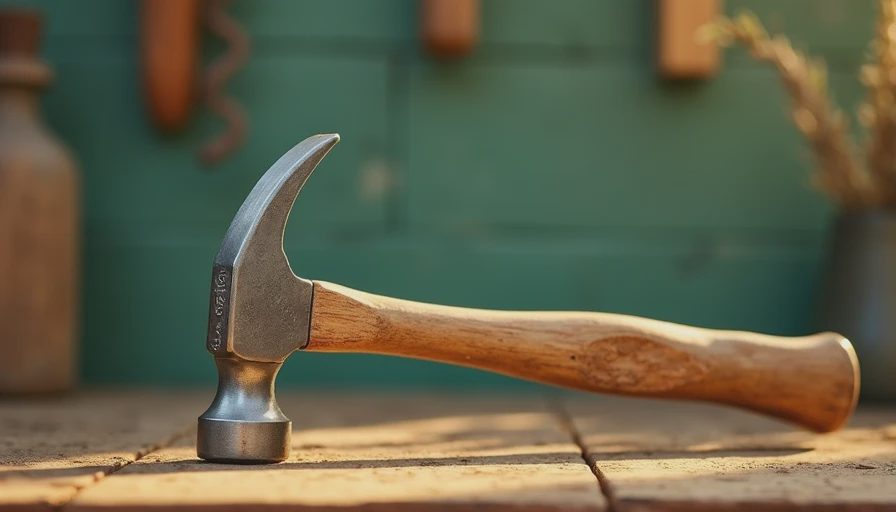
A practical buying and setup checklist
Before adding the Fiskars Isocore 20 oz smooth face claw hammer steel handle to your basement kit, inspect the grip for a secure, comfortable fit. Swing it in a store if possible, or hold it in several positions. Check that the face is smooth and evenly finished, the claw is straight, and the head does not appear loose. The 20-ounce weight should feel balanced rather than front-heavy.
Then match it to the rest of your kit. Add a tape measure with a readable hook, a torpedo level, safety glasses, a utility knife, a nail set, and a small pry bar. This combination will cover much of the early work in a storage conversion or workshop build. Plan a simple wall-mounted tool rail beside the bench, but keep the hammer low enough to retrieve without reaching across a saw or stack of lumber.
Budget roughly $25 to $50 for a quality general-purpose hammer, depending on the retailer and current pricing. Spending more is justified when the grip, balance, and durability improve your daily experience. Spending less can work for occasional use, but a weak grip or poorly finished face becomes frustrating quickly.
The basement-specific verdict
The Fiskars Isocore 20 oz smooth face claw hammer steel handle is a strong fit for homeowners who want one durable hammer for repairs, shelving, trim, and moderate framing. Its steel construction favors longevity, its smooth face suits visible wood, and its 20-ounce head avoids the extremes of a light household hammer or heavy framing tool.
I would place it in the first drawer or tool rail of a phased basement workshop, before buying specialized equipment. It will not solve every construction problem, and no hammer should replace careful measuring or proper protective equipment. But for the ordinary sequence of fastening, adjusting, removing, and finishing, it is a practical foundation. Design the bench around that daily workflow, and the tool will stay accessible instead of disappearing into basement clutter.




No notes yet — write the first one.