A Milwaukee lawn mower is an appealing choice for homeowners who already use the brand’s M18 battery platform and want to reduce gasoline, engine noise, and seasonal maintenance. But buying the machine is only half the decision. In an older Chicago home, the more interesting question is where it lives when the grass stops growing. A basement can provide secure, dry storage, but only if the layout accounts for access, battery care, moisture, and safe separation from living areas.
I approach this the same way I approach any basement plan: draw the movement first. A mower that must be carried down a narrow stair, turned around a boiler, and lifted over holiday bins will become a nuisance quickly. A mower parked near a wide exterior entry, with a charging shelf and clear floor area, can become an orderly part of the house rather than another object shoved into a corner.
Which Milwaukee Lawn Mower Fits Your Yard?
The Milwaukee M18 FUEL 21-inch self-propelled mower is the obvious starting point for many suburban lots. Its steel deck, dual-battery setup, and self-propelled drive make it suited to larger lawns where pushing a full-size machine uphill becomes tiring. The tradeoff is weight. A mower in this category can be difficult to lift, especially on basement stairs, so measure the route before ordering one.
For a smaller city lot, a compact electric mower can make more architectural sense than the largest available deck. A 21-inch cutting width covers ground efficiently, but a smaller machine is easier to rotate through a 30-inch doorway and easier to hang or park in a shallow storage zone. If you already own Milwaukee tools, shared M18 batteries can simplify your equipment collection, although a mower generally needs multiple high-capacity packs for useful runtime.
Expect to spend roughly $600 to $1,000 for a quality battery mower package, depending on the included batteries, charger, drive system, and promotions. Compare that complete package rather than the bare-tool price. A low advertised price can look attractive until two compatible batteries add several hundred dollars.
Measure the Storage Route Before You Buy
Take four measurements: the narrowest door opening, stair width, ceiling height along the stair, and the turning space at the bottom. Record obstructions such as handrails, radiator pipes, sump pumps, and furnace platforms. A basement stair may be 36 inches wide at the top but effectively narrower where a railing or trim projection steals clearance.
A Milwaukee lawn mower should never be stored where it blocks the electrical panel, water shutoff, furnace service access, or a required path to an exterior exit. I like to reserve a rectangular equipment bay about 4 feet wide by 6 feet deep for a mower, trimmer, charger, and seasonal tools. That sounds generous, but the extra space lets you pull the mower out without unloading everything else.
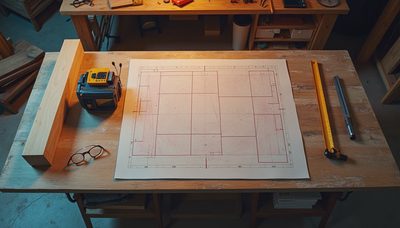
Use a simple floor plan. Mark the mower footprint, then draw a three-foot working path in front of it. If the drawing forces you to cross the mechanical room every time you need the machine, move the storage zone. Good basement design removes repeated friction through geometry, not motivational labels.

A concrete floor is suitable for equipment storage, but it is not automatically dry. Keep the mower away from known seepage points and set it on a low rubber equipment mat. The mat protects the floor from dampness, grass residue, and small oil or lubricant drips from other tools. Battery equipment does not produce gasoline fumes, but the basement still needs normal ventilation and must remain free of combustible clutter around heating equipment.
Battery Storage and Charging Details
The batteries deserve their own location. Install a sturdy shelf at about waist height, away from a utility sink, exterior foundation wall, or area that experiences condensation. A shelf 12 to 16 inches deep usually handles chargers and battery packs without consuming valuable floor area. Leave open space around the charger so heat can dissipate, and use a properly grounded outlet rather than a tangled extension cord.
Do not charge packs on the mower in a damp garage or basement corner. Bring batteries indoors to a clean, dry area when temperatures are extreme, and let a cold pack return to room temperature before charging. Follow Milwaukee’s current charging and storage instructions for the specific battery model. The practical goal is simple: dry batteries, visible cords, and no charging station hidden behind cardboard boxes.
Many homeowners create a small tool wall using plywood, cleats, and labeled hooks. A dedicated hook for the charger cable prevents it from lying on the floor. Another hook can hold the mower key or safety mechanism. This is a minor detail, but it separates a usable equipment station from a storage pile that requires a search every Saturday morning.
Basement Design That Keeps Yard Work Outside
Grass clippings and wet leaves are the real enemies of a clean basement. Create a transition zone near the exterior entrance if possible. A 4-by-6-foot area with a washable mat, wall hooks, and a small boot tray gives you somewhere to inspect the mower before it enters the finished portion of the basement.
If the basement is unfinished, a painted plywood partition can screen the equipment without pretending the area is a finished room. In a finished basement, use a closet with a wide door, durable wall protection, and a floor surface that can be swept or mopped. I would not place a Milwaukee lawn mower inside a carpeted media room, guest suite, or children’s play area simply because an empty corner is available.
Leave room for cleaning. The deck may need brushing after use, and the wheels can carry soil indoors. Do that work at the exterior threshold or in a utility area with a floor drain, never over a finished wood floor. A few inches of clearance around the machine also makes maintenance possible without dragging it across the room.

A Better Equipment Zone for Older Homes
Older basements often have awkward structural columns, low beams, and mechanical equipment placed wherever the original builder found space. Instead of fighting those conditions, use them to define zones. A column can mark the edge of the lawn-equipment bay. A low beam can identify the area for wall-mounted hand tools, while the taller space near the stair holds the mower handle upright.
One homeowner with a narrow 1920s basement might use a phased plan: first install a dedicated outlet and clear the circulation path, then add a sealed floor coating, and later build a cabinet for batteries and small tools. That sequence can cost less than a full basement renovation while immediately improving daily use. A Milwaukee lawn mower does not require a complete remodel; it requires a logical place in the plan.
Keep the equipment zone visually honest. Smooth plywood, galvanized hooks, and a durable gray floor can look intentional without turning a utility corner into a showroom. Avoid deep cabinets that hide the mower. Visibility encourages maintenance and makes it obvious when a battery has been left on the charger or a deck needs cleaning.
Buying Checklist and Final Recommendation
Before purchasing, confirm that the mower fits through every doorway, determine whether the package includes batteries and a charger, and calculate the walking distance from storage to the lawn. Check the slope and surface of the yard before paying extra for self-propelled drive. For a flat, compact lot, that feature can add weight without adding much value. For a sloped yard, it can be the difference between finishing comfortably and abandoning the job halfway through.
Then design the storage area around the complete system: mower, batteries, charger, trimmer, leaves, and cleaning brush. The best setup is not necessarily the largest basement or the most expensive tool. It is a clear route, a dry charging shelf, protected mechanical access, and enough empty floor to remove the machine without a ten-minute excavation.
A Milwaukee lawn mower makes particular sense when shared batteries already power your drills, saws, or outdoor tools. Pair it with a deliberate basement equipment zone, and the machine becomes part of a coherent household system. Leave it in a damp corner behind storage bins, and even a capable mower will feel like one more obstacle below grade.




No notes yet — write the first one.